Your German car was engineered brilliantly. The engineers at BMW, Audi, Mercedes-Benz, Volkswagen, Porsche and Mini spent years getting the physics right. But here is something worth knowing: the car that rolled off the production line is almost certainly not running at its full potential.
Performance tuning, specifically ECU remapping, changes that. It adjusts the software map that controls how your engine uses fuel, air and timing. The result is often a meaningful improvement in torque, power and throttle response, and in many cases a genuine reduction in fuel consumption.
This article explains how performance tuning works, what it can and cannot do for your specific vehicle, and what separates a trustworthy tune from a bad one.
What is performance tuning for German cars?
Every modern European vehicle is controlled by an Engine Control Unit, the ECU. Think of it as the brain of the engine. The ECU uses a software map to decide how much fuel to inject, when to fire the spark plugs, how much boost to allow in turbocharged engines, and dozens of other parameters that directly affect how your car performs.
The factory calibrates this map conservatively. There are good commercial reasons for that. Manufacturers often sell the same engine in multiple markets with different fuel quality standards, emissions laws, and temperature ranges. To ensure the engine survives all those conditions, they tune it to the lowest common denominator. In many cases, particularly in turbocharged engines common across BMW, Audi, Mercedes-Benz and Volkswagen, there is real performance left on the table.
ECU remapping rewrites those parameters to unlock the engine’s actual capability, calibrated to your specific vehicle, your fuel grade, and your conditions.
What results can you realistically expect?
Results vary by engine, but turbocharged petrol and diesel engines respond best to remapping.
A turbocharged diesel Volkswagen or BMW typically sees torque gains in the range of 20 to 30 percent, with a corresponding improvement in economy under normal driving. The engine reaches its torque peak earlier and holds it longer, which makes overtaking and motorway driving noticeably different.
Turbocharged petrol engines in BMW M-Sport models, Audi S-line variants and Mercedes AMG-engined vehicles often see power increases in the range of 10 to 20 percent, depending on the starting tune and what the hardware can support safely.
Naturally aspirated engines have less headroom, because there is no boost pressure to increase. Improvements exist but are generally modest.
What good tuning does not promise: it will not double your power, it will not eliminate the need for maintenance, and it will not compensate for worn injectors, a failing turbo, or tired spark plugs. If the underlying engine is not healthy, a tune should wait. Based on our experience with conducting remapping on German vehicles, we recommend completing a diagnostic check if your car hasn’t been checked by an experienced mechanic recently.
The Viezu difference: why the technology behind the tune matters
Not all remaps are equal. The software and calibration method matter as much as the skill of the technician.
At Pace Auto Werks, performance tuning is carried out using Viezu technology. Viezu is a British ECU tuning company whose software is used by specialist workshops globally and has been independently tested for fuel economy and emissions performance. The Viezu calibration approach is based on the principle that power and economy are not opposites. A well-calibrated map improves combustion efficiency, which means the engine produces more usable power from the same fuel burn.
This matters particularly for Perth drivers. Long highway distances, high ambient temperatures, and 91 or 98 RON fuel choices all affect how a tune performs in practice. A generic file downloaded from a tuning forum is calibrated for someone else’s conditions, not yours. A Viezu-based tune calibrated for your specific vehicle takes those variables into account.
Which German vehicles respond best to performance tuning?
Pace Auto Werks carries out performance tuning on all six German marques serviced at the workshop. Here is a practical overview of what to expect for each:
BMW
Turbocharged petrol and diesel BMW engines are among the most remap-friendly platforms available. The N47 diesel and B47 diesel engines found in the 1 Series, 2 Series, 3 Series and 5 Series respond consistently well. The N20 and B48 petrol engines in similar models also have good headroom. BMW M-Sport and M Performance engines can be tuned but require careful calibration given the tighter tolerances.
Mercedes-Benz
The OM651 and OM654 diesel families and the M274 petrol four-cylinder are common candidates. AMG-badged vehicles can be tuned but require specialist knowledge of the additional hardware. Pace Auto Werks has worked on Mercedes-Benz vehicles exclusively for over 25 years, which means the team understands these platforms at a level a general workshop does not.
Audi
Audi’s EA888 petrol engine family, used across a wide range of A3, A4 and A5 models, is a well-documented platform for remapping. Audi’s TDI diesel range, particularly the 2.0 TDI and 3.0 TDI, respond reliably to calibrated diesel remaps for improved torque and economy. S-line and S-badged variants often have additional factory headroom.
Volkswagen
The same EA888 petrol and TDI diesel engines found in Audi appear across the Volkswagen Golf, Passat and Tiguan ranges. Owners looking to improve performance in a Golf GTI or improve the economy of a Passat diesel will find VW platforms behave predictably under a calibrated remap.
Porsche
Porsche engines are high-precision platforms and require conservative, measured calibration. Gains tend to be modest on naturally aspirated flat-six engines, but turbocharged models such as the Cayenne diesel and later Macan variants respond better. Any Porsche tuning at Pace Auto Werks is preceded by a full diagnostic check to confirm the vehicle is in appropriate condition.
Mini
The Cooper S and Cooper D variants use BMW-derived engine families and respond similarly to their BMW counterparts. A Mini Cooper S with the B48 or N18 engine can see useful gains in power and throttle response from a calibrated remap.
What good performance tuning looks like in practice
A competent performance tune starts before any software is touched.
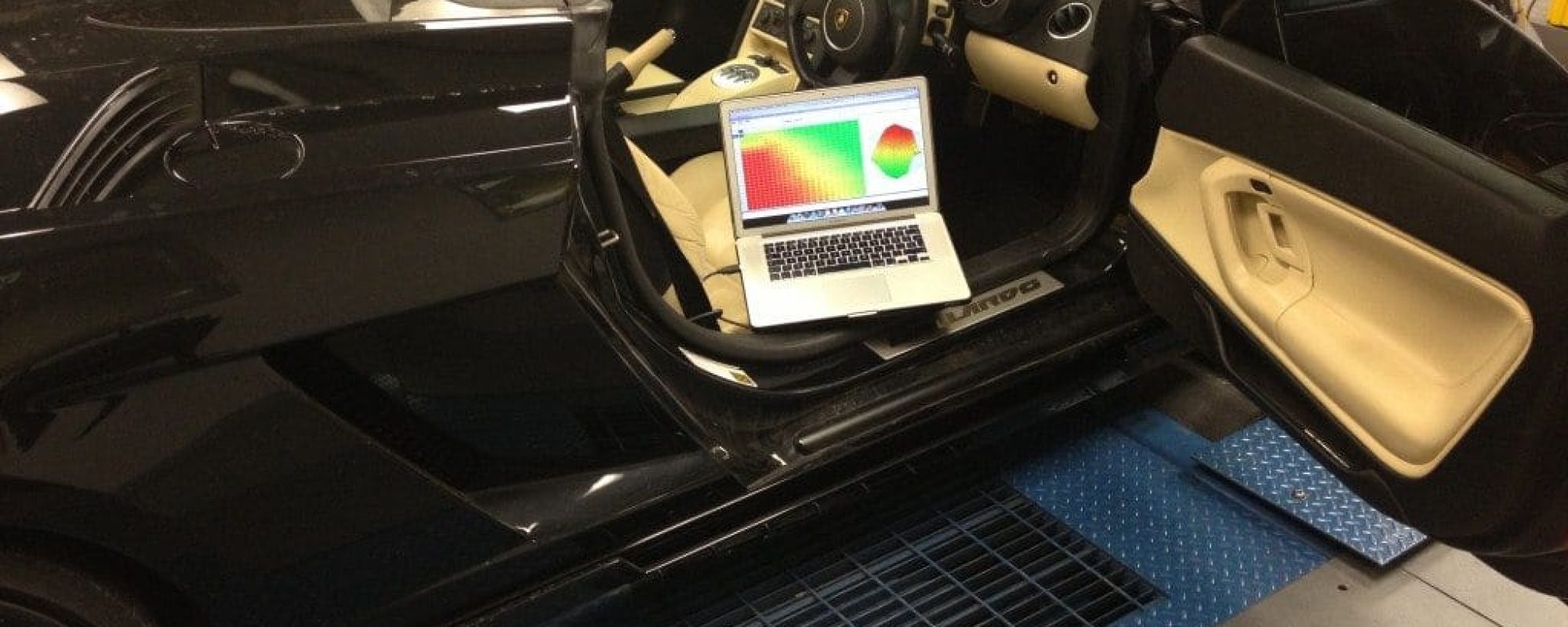
At Pace Auto Werks, the first step is a diagnostic scan to confirm the engine is healthy. Fault codes, injector data, boost pressure readings and fuel trim values are checked. If there is an underlying issue, it is addressed before the tune proceeds.
The remap is then loaded and the vehicle is checked on a warm idle and under load to confirm the calibration is performing as expected. The technician checks for knock events, boost pressure targets, and fuelling values. If anything sits outside acceptable parameters, the map is adjusted.
After the tune, the vehicle is rescanned to confirm no new fault codes have appeared and that the engine management system is reading correctly.
What you should expect from any tuner before handing over your keys: a clear explanation of what will change and why, a pre-tune health check, confirmation of what software is being used, and a post-tune scan. If a workshop cannot provide all four, that is worth factoring into your decision.
A note on warranty and insurance
This is a question that comes up often, and it deserves a direct answer.
Remapping an ECU will typically affect your manufacturer’s warranty on the affected engine components. If your vehicle is still under manufacturer warranty and that matters to you, speak with the team at Pace Auto Werks before proceeding. For many owners, the vehicle is outside warranty already and this is a straightforward decision.
From an insurance perspective: you are required to disclose modifications to your insurer. An ECU remap counts as a modification in most policies. Failing to disclose can affect a claim. This is not a reason to avoid tuning, but it is a step that should not be skipped.
Pace Auto Werks will walk you through this honestly before any work is carried out. There are no surprises.
Frequently asked questions
What is ECU remapping and how does it improve performance?
ECU remapping involves rewriting the software parameters that control how your engine manages fuel, air, timing and boost. On turbocharged German engines in particular, the factory calibration is often conservative. A specialist remap adjusts those parameters to suit your specific vehicle and driving conditions, typically increasing torque and power while improving fuel efficiency at cruising speeds.
Is performance tuning safe for my German car?
When carried out by a qualified specialist using professional calibration software on a healthy engine, performance tuning is safe. The key requirements are a pre-tune diagnostic check to confirm the engine is in good condition, and the use of calibration software appropriate for the platform. A generic or uncertified tune carries more risk. At Pace Auto Werks, all tuning is done using Viezu technology by technicians with over 25 years of German vehicle experience.
Will a remap affect my fuel economy?
On diesel vehicles in particular, a well-calibrated remap often improves fuel economy under normal driving conditions. This happens because the engine reaches its torque peak earlier and does not need to work as hard at cruising speeds. On petrol engines the outcome depends on driving style: if you use the additional power, consumption may increase; if you drive in a similar pattern to before, consumption often stays similar or improves slightly.
Which German cars benefit most from performance tuning?
Turbocharged engines respond best, and most modern German cars use turbocharged petrol or diesel units. BMW, Audi, Mercedes-Benz and Volkswagen turbo-diesel models in particular tend to show consistent results. Naturally aspirated engines and hybrid powertrains have more limited headroom.
Does Pace Auto Werks tune all German marques?
Yes. Pace Auto Werks carries out performance tuning on BMW, Mercedes-Benz, Audi, Volkswagen, Porsche and Mini vehicles. As a German automotive specialist workshop operating exclusively on European marques since 1999, the team has deep familiarity with the engine families across all six brands.
Do I need to book a separate diagnostic check before a tune?
At Pace Auto Werks, a diagnostic scan is included as part of the performance tuning process. The team will check your vehicle’s health before any calibration work begins. If an issue is found, you will be informed and given the option to address it first.
If you are ready to find out what your car can do
Your BMW, Audi, Mercedes, Porsche, VW or Mini was built with more capability than the factory map allows. A calibrated ECU remap using Viezu technology is one of the most cost-effective ways to access it.
Pace Auto Werks has been working exclusively on German vehicles in West Perth since 1999. Simon Locke and the team bring 25 years of specialist knowledge to every tune, and every performance tuning job starts with a full diagnostic check.